
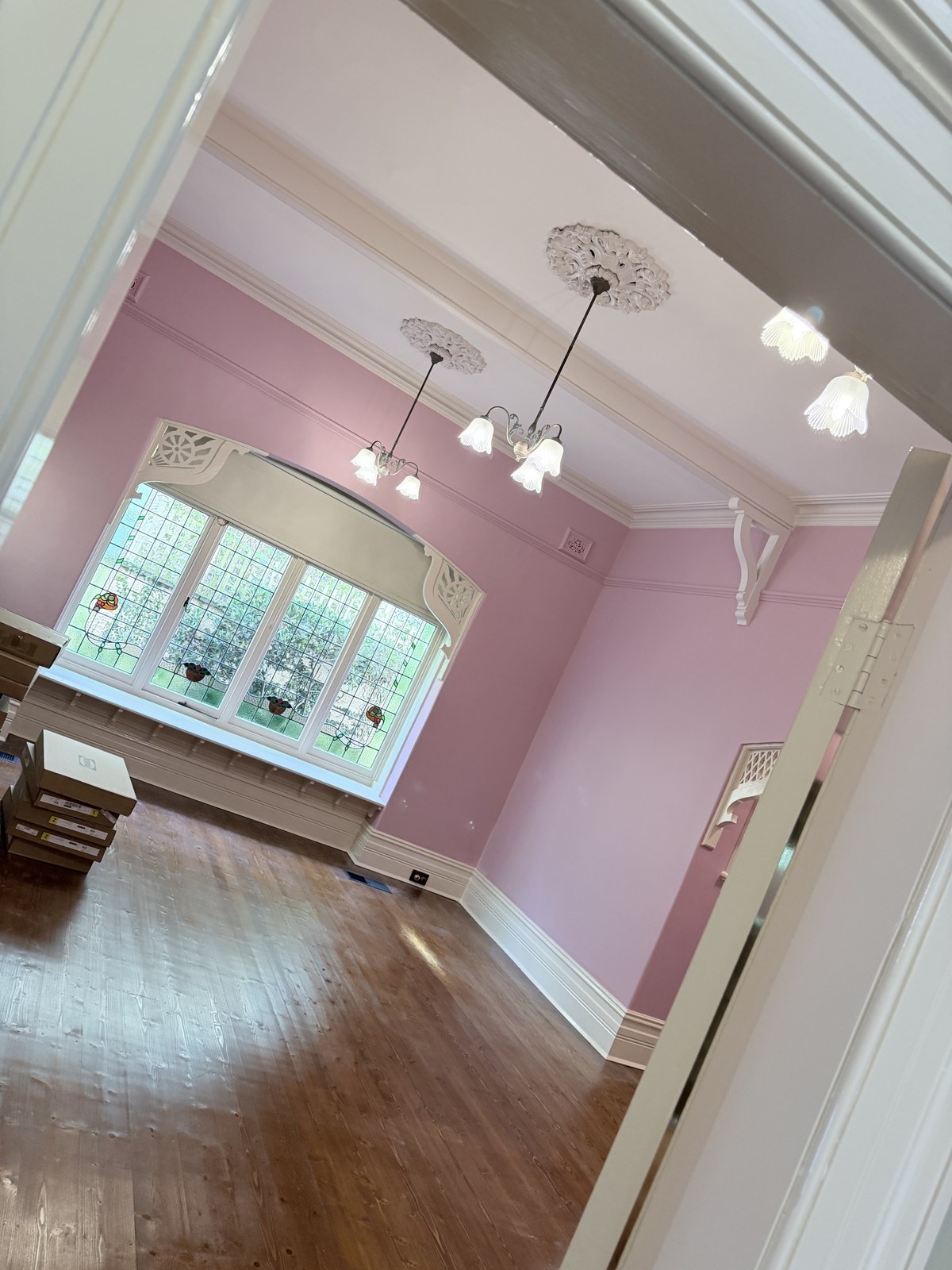
The question is not only whether there is space for painters to work. It is whether the household can use the home practically while rooms, routes and surfaces are temporarily unavailable. Discussing this before quoting helps avoid a programme based on access that cannot actually be provided.
Start with the rooms you cannot lose together
Identify sleeping areas, cooking facilities, bathrooms and any workspace that must remain available. Then discuss whether the scope can be divided into sensible stages. Hallways, stairs and connected open-plan spaces may affect more than one room at a time. A room-by-room plan should describe both the work area and how occupants will move around it.
Who moves and protects the furniture?
Agree responsibilities item by item. Small possessions, delicate objects, large furniture and fixed equipment create different practical questions. Confirm where contents will be stored and whether they need moving more than once. Do not assume furniture handling, appliance disconnection or specialist removal is included simply because the quotation says protection.
- Name items the owner will move
- Confirm any handling included in the quote
- Keep agreed access routes clear
- Discuss heavy, fragile or fixed items separately
Plan around the actual coatings
Ask which products will be used and what their ventilation, drying, curing and re-entry instructions require. These are product-specific matters, not a universal promise that a room is usable after a fixed number of hours. Raise any household concerns before work is planned. For individual health concerns, seek appropriate professional advice rather than relying on a general painting article.
Check the manufacturer’s coating-care guidanceDiscuss children, pets and work-from-home routines
Tell the painter about the routines the programme must accommodate, including calls, deliveries and periods when an adult will not be present. Agree boundaries around active work and materials. Plan a suitable alternative space for children and pets rather than expecting the painting team to supervise them. A practical arrangement needs cooperation from everyone using the property.
What changes if the property is vacant?
A vacant home may allow more areas to be released together, but it still needs agreed access, utilities and a handover plan. An occupied home may require additional staging and handling. Describe the actual situation in the estimate and scope review so the programme is not based on the wrong assumption. Confirm any pricing implications in the quotation rather than guessing an allowance.
Agree the daily handover before work begins
Ask which rooms and routes will be usable at the end of each stage, what must remain untouched and how changes will be communicated. Keep the selected surfaces and exclusions available for review. If the proposed arrangement does not meet essential household needs, discuss different staging or alternative accommodation before confirming the project.
Frequently asked questions
Can I sleep in a room painted that day?
Do not assume so. Follow the specified product's instructions and the project handover guidance; individual health considerations may require professional advice.
Is moving furniture included?
Check the written scope. Confirm responsibilities for small items, heavy furniture and specialist fittings separately.
Does an online estimate confirm the working schedule?
No. It provides an initial interior estimate. Occupancy, access, scope and timing need separate confirmation.
Does low-odour paint mean every room can stay occupied?
No. Product suitability, ventilation, the work being done and household needs still need to be considered. Confirm the specified products and room-release instructions before agreeing to stay throughout the project.
What should be agreed at the end of each day?
Confirm usable rooms and routes, areas that must remain untouched, how materials are secured and the next stage of work. Raise any change to essential household access before the team leaves.
Sources and further reading
References and further reading
- Caring for painted surfacesDulux Australia
Planning your Colourway project
For residential interiors, our online tool gives you an initial estimate from the rooms and surfaces selected. Exterior, commercial and strata work is assessed on site so access, preparation and the correct coating system can be confirmed before fixed pricing.