
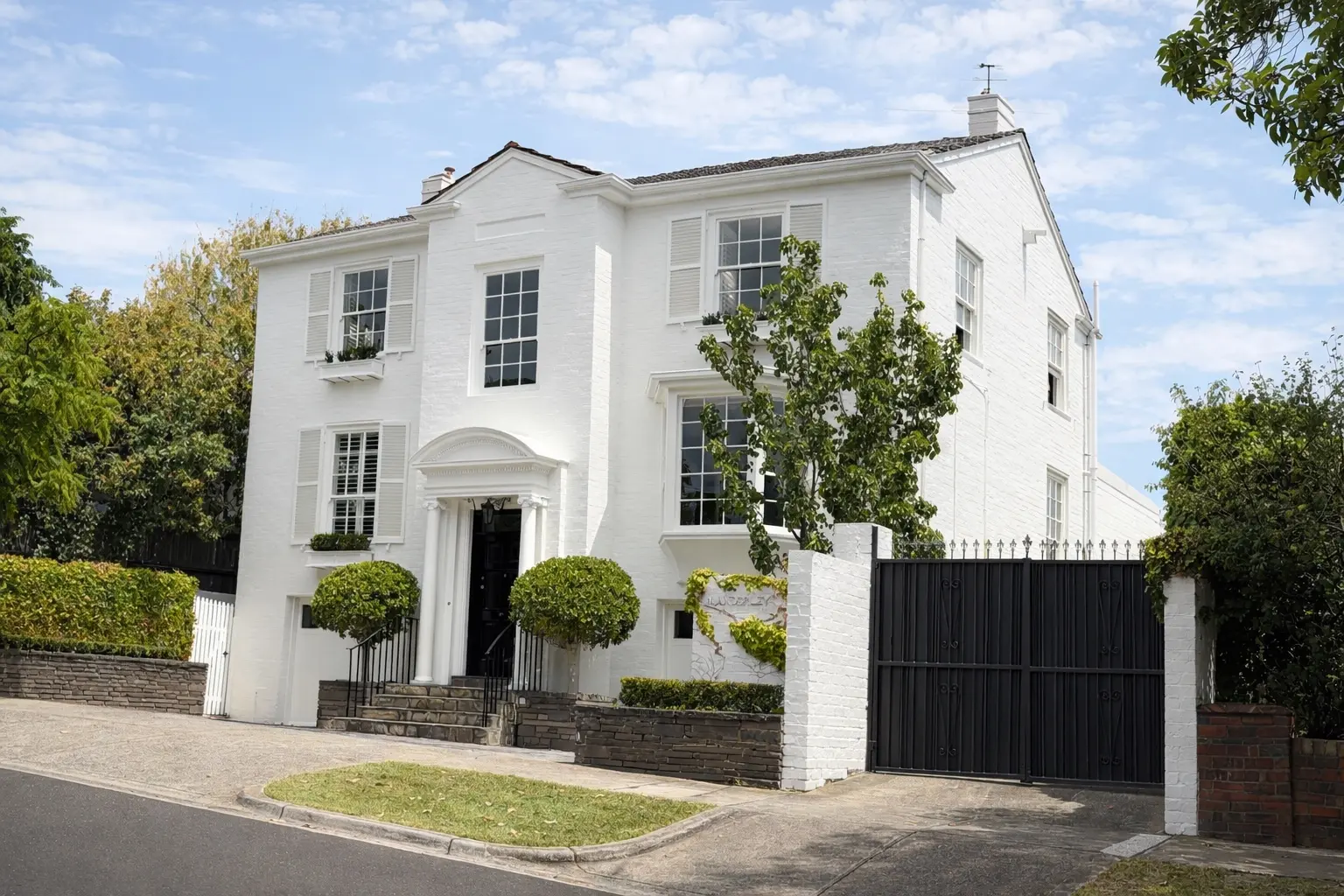
Painting a brick house can change its appearance dramatically, but the first decision is whether the brickwork should be coated at all. A colour you love is only part of the brief. The wall’s condition, existing finishes, moisture behaviour and any heritage controls determine which options are suitable. This guide helps you prepare for an exterior painting assessment, compare the alternatives and ask for a quotation that describes the actual work.
Paint, limewash, render or retain the brick?
Start with the result you want. Do you want an even colour while retaining the brick pattern, a more varied finish, a different wall texture, or simply a tidier exterior?
| Option | Appearance and purpose | What to confirm first |
|---|---|---|
| Retain the brick | Keeps the existing brick colour and texture. Cleaning, suitable repairs or changes to adjacent trims may be enough. | Whether the brick is sound and whether the main concern is staining, deterioration or colour. |
| Exterior paint | Gives an opaque colour while the brick relief and mortar pattern generally remain visible. | A compatible coating system, surface preparation and an acceptable maintenance plan. |
| Limewash | Can create a matt finish with tonal variation; coverage depends on the product, background and application. | Brick absorbency, existing coatings, exterior suitability and a representative sample. |
| Mineral paint or masonry stain | Offers other ways to change colour while retaining masonry character. These are different product systems. | Written manufacturer guidance for the particular brick and any existing finish. |
| Render and its specified finish | Builds a new surface over the masonry, changing its profile rather than only its colour. | The proposed render system, substrate repairs, junction details and final finish. |
These are different choices, not interchangeable products. Bauwerk’s brick limewash guide explains why absorbency and previous paint affect the result. Dulux also offers texture coatings intended to cover brick texture; the exact system determines the result.
When painting brick can make sense
Painting is worth considering when the brickwork is suitable and your goal is a consistent colour across an elevation. It may also be an appropriate maintenance choice for brick that is already painted, subject to the condition and compatibility of the existing coating.
Before committing, compare the proposed wall colour with the roof, windows, paving and anything else you plan to retain. Ask for a sample that includes both brick faces and mortar joints. Looking at a small colour card alone will not show the finished relationship between those surfaces.
The main trade-off is future upkeep and reversibility. The Brick Industry Association cautions that painted brick requires maintenance and that removing the coating can be difficult and expensive. Choose the finish as a lasting property decision, rather than assuming it can be undone easily. Brick Industry Association homeowner guidance.
When to pause before painting
Use this checklist to decide what needs assessment. It is a way to brief your painter, not to diagnose the building from a photograph.
| What you notice | What to ask before proceeding |
|---|---|
| White powder or recurring pale deposits | Could this be efflorescence, and has the source of moisture been investigated? |
| Persistent damp patches or staining below gutters | Does a roof, gutter, flashing or drainage issue need attention first? |
| Crumbling mortar or damaged brick faces | What masonry repairs are required, and who will carry them out? |
| Cracks that reopen or appear to be changing | Is further building assessment needed before cosmetic repair? |
| Peeling existing paint | What caused the failure, and which layers can safely remain? |
| Old, previously unpainted brick or uncertain heritage status | Is painting appropriate, and what council advice or approval is required? |
White deposits deserve particular attention. Resene explains that efflorescence can damage paint coatings and that the moisture source should be addressed before removal. It also warns that waterblasting can introduce more water and prolong the problem. There is no universal pressure-washing recipe for every brick wall. Resene efflorescence guidance.
What breathable paint actually means
For masonry, “breathable” describes the passage of water vapour through a coating. It does not mean the paint will solve a damp wall.
Wall construction matters. A wall with a functioning drainage cavity manages moisture differently from solid masonry. The complete coating build-up, including previous layers, must suit that construction. Required drainage openings, weep holes and movement joints must retain their function.
Ask the painter how the proposed system suits your wall, rather than accepting “waterproof” or “breathable” as a complete specification. The Brick Industry Association’s technical guidance explains these distinctions and the importance of addressing water entry before treatment.
Check Melbourne heritage requirements first
A neighbouring painted house does not establish what is permitted on yours. Check your property’s controls before arranging a sample or changing an unpainted exterior.
Glen Eira City Council states that externally painting an unpainted surface in a Heritage Overlay requires a planning permit. It also identifies additional external paint controls that can apply to particular properties. Confirm the requirements with the council responsible for your address. Glen Eira Heritage Overlay controls.
For older buildings, preserving the original masonry may be the better choice. The UK’s Society for the Protection of Ancient Buildings advises that painting exposed brick can harm an old building’s character and emphasises compatibility when selecting paint. This is useful conservation guidance; local approval requirements still come from Victoria and your council. SPAB paint guidance.
What a well specified brick repaint involves
Assessment and a sample. Establish whether the wall is bare, painted or treated, identify areas needing investigation, and agree on the intended appearance. Record what remains uncertain.
Repairs and preparation. Define cleaning, treatment of unstable coatings and any masonry repair separately. Confirm drying and curing requirements for repairs before coating. Older coatings may need appropriate assessment before disturbance.
A named coating system. The quote should identify the preparation products, any required primer or sealer, and finish coats. Avoid adding a generic sealer simply because the wall is brick: the selected system must specify what is compatible. Dulux provides an Australian brick-painting guide, while Resene’s brickwork specification demonstrates how treatment changes with the substrate and performance requirement. Product instructions should govern the actual job.
Suitable application conditions. Confirm how the team will handle rain, dew, cold surfaces, strong sun and access around the house. Product recoat instructions and actual conditions determine when the next stage can proceed. A dry-looking surface is not a substitute for checking that it meets the specification. See the application guidance for the selected Dulux Weathershield product.
Protection and handover. Record which windows, doors, paving, plants and neighbouring areas need protection. At handover, keep the product names, colours, sheen levels and care instructions together for future maintenance.
A real painted brick example in Caulfield North
Colourway’s Caulfield North project gallery shows a completed white-painted brick exterior with sash windows, shutters, decorative entry details and contrasting dark elements.
It is a useful example of why the scope should separate the wall from the surrounding features. A front elevation can contain masonry, windows, a door, columns and gates; the rear may introduce pergola structures and an alfresco area. Ask which of these are included rather than assuming “paint the exterior” covers everything.
Use project photographs to discuss the appearance you want. The assessment of your own property establishes the suitable preparation and coating system.
What changes the cost of painting a brick house
For a useful price comparison, ask each contractor to quote the same elevations and surfaces. A front-only refresh and a full exterior repaint are different projects, even when the houses have the same number of bedrooms.
The quotation should make clear:
- The elevations, wall areas and separate trims included.
- Access requirements, including upper levels and restricted boundaries.
- Cleaning, preparation and coating removal allowances.
- Masonry repairs, specialist assessments and exclusions.
- The product system, coat allowances, colours and finish.
- Protection, clean-up, GST and how proposed variations require approval.
A square-metre rate alone cannot describe those differences. Colourway assesses exterior work on site before preparing fixed pricing. Our exterior inspection guide explains how to prepare, and our quote comparison tool helps you check written differences between proposals.
Questions homeowners ask
Is painting brick better than rendering?
Choose according to the desired finish and the wall’s suitability. Painting generally retains the brick pattern; render builds a different surface profile. Compare complete preparation and finish systems before comparing totals. Neither choice should be used to hide an unresolved building problem.
Can limewash go over previously painted brick?
Do not assume it can be applied directly. Existing paint changes absorbency and adhesion. Ask the limewash manufacturer for the appropriate exterior system and approve a sample first. Bauwerk distinguishes between absorbent brick and previously painted backgrounds in its surface guide.
Can I repaint brick that is already painted?
Potentially, but the existing finish needs assessment. Peeling or poorly bonded layers should not simply be covered. Preparation, remaining coating compatibility and the cause of failure determine the next step. Dulux guidance on peeling paint explains why preparation and the underlying problem matter.
How long will painted brick last?
There is no dependable lifespan for every house. The original surface, preparation, coating system, exposure and maintenance all affect performance. Ask for product-specific care advice and the applicable written warranty terms. A stated warranty period should not be treated as a promise that the exterior will need no maintenance.
Can I get an instant exterior painting price?
Colourway’s 60-second online estimator is for residential interiors. Brick exteriors need an on-site assessment so the wall condition, access and included surfaces can be reviewed before fixed pricing. An assessment request becomes an appointment when the booking details are confirmed.